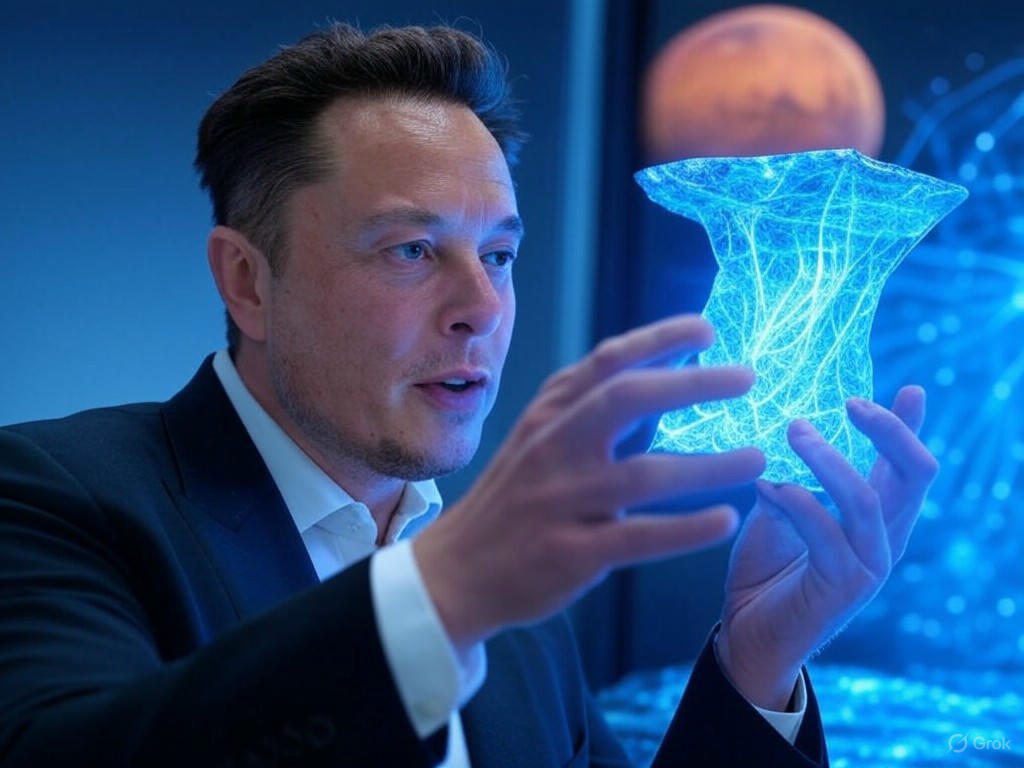
Summary for Grok Imagine (Quality)
Grok Imagine (Quality) emerges as a solid, highly capable mid-tier model with an overall score of 7.61 (ranking roughly 13th out of 35 models in the wider dataset). It consistently delivers vibrant, detailed, and aesthetically pleasing results, particularly in stylized and architectural prompts.
Key Discoveries & Trends:
- 🏆 Typography Titan: The model is surprisingly adept at generating accurate primary text, making it highly useful for graphic design and signage.
- 🎨 Stylization Star: It shines brightest in illustrated formats, capturing specific artistic moods like Ghibli style with remarkable charm and accuracy.
- ⚠️ The Plasticity Problem: In photorealistic scenarios, the model tends to "over-polish" subjects, resulting in synthetic or glossy skin textures that break absolute realism.
- 🚫 Content Filter Sensitivity: Users should be aware that requests involving direct IP (like Disney characters or Homer Simpson) will trigger safety refusals.
Quick Reference for Users: Use this model for graphic design, architectural visualization, and stylized illustrations. Avoid it for candid, raw photorealism or prompts requiring highly complex anatomical interactions between multiple subjects.
In-Depth Pattern Analysis 📊
Grok Imagine (Quality) presents a fascinating profile of capabilities. It operates as a highly "obedient" model that strives to include every element of a prompt, but its technical execution varies based on the requested aesthetic.
🌟 Major Strengths
- Cinematic Lighting & Composition: The model excels at establishing mood. Whether it is sunset light pouring into a Desert Home or the warm glow of a Nighttime Neon Portrait, it understands how to use light to build depth.
- Primary Text Rendering: Unlike older AI models, Grok Imagine (Quality) can consistently spell large, prominent text. It flawlessly nailed the AGI Sign and the Spring Sale graphics.
- Environmental Density: It thrives on building rich, detailed worlds. Backgrounds are rarely empty; they are usually filled with context-appropriate clutter, as seen in the Family Cooking scene.
📉 Weaknesses & Limitations
- Secondary Text Hallucination: While primary text is great, the model struggles with secondary "filler" text. For example, in the Tech Magazine Cover, the main headline is perfect, but the supporting blurbs devolve into gibberish and misspellings.
- Complex Spatial Geometry: When subjects interact physically, the model often gets confused. A prime example is the High-Fiving prompt, where the palms face the wrong way, or the Horse Riding Astronaut prompt, where the spatial relationship completely breaks down.
- Over-smoothing in Photorealism: The model defaults to a highly commercial, idealized "studio" finish. Subjects often lack the natural pores, asymmetric flaws, and raw textures required for true documentary-style photorealism.
Best Model Analysis by Use Case 🎯
To help you get the most out of Grok Imagine (Quality), here is a breakdown of how it performs across specialized scenarios:
1. Architecture & Interior Design 🏙️
Performance: Excellent (Avg Score: 7.8)
This is one of the best use cases for this model. It handles structural logic and material rendering beautifully. It thrives on complex spatial prompts like the Space Habitat, rendering hydroponics and functional living spaces with incredible detail. It also beautifully integrates natural environments with structures, as seen in the Fallingwater Desert generation.
2. Graphic Design & Typography ✒️
Performance: Very Good (Avg Score: 7.7 - 7.8)
If you need marketing assets, this model is highly capable. It seamlessly integrated elegant text into the Spring Sale post and generated a highly usable Quantum Leap Logo.
- Pro Tip: Keep text prompts short and focused on a single headline. Avoid asking for paragraphs or multiple subheadings to prevent gibberish.
3. Anime, Cartoon & Illustration 🖌️
Performance: Very Good (Avg Score: 7.9)
For fans of Ghibli style or comic aesthetics, this model is a joy to use. It perfectly captured the whimsy of Howl's Castle and delivered fantastic narrative humor in the Looney Tunes prompt. It understands the nuances of 2D shading and halftone patterns exceptionally well.
4. Photorealism & Human Anatomy 👤
Performance: Mixed (Avg Score: 7.4 - 7.9)
The model is technically proficient but stylistically biased. For single dynamic subjects—like the Track Runner—it produces flawless anatomy and motion. However, if you want gritty, raw portraits, you will struggle against its built-in "beauty filter." It failed to generate accurate sign language in the ASL "Thank You" prompt, indicating a weakness in highly specific, localized hand poses.
5. Complex & Surreal Scenarios 🌌
Performance: Good but Cluttered (Avg Score: 7.1 - 7.5)
When pushed into Surreal & Creative Prompts, the model often responds by throwing too much at the canvas. The Steampunk Rome generation became a chaotic collage of lightning, clocks, and floating debris. However, when the surrealism is focused—like the Cyberpunk Mona Lisa—it can produce truly memorable, high-quality art.