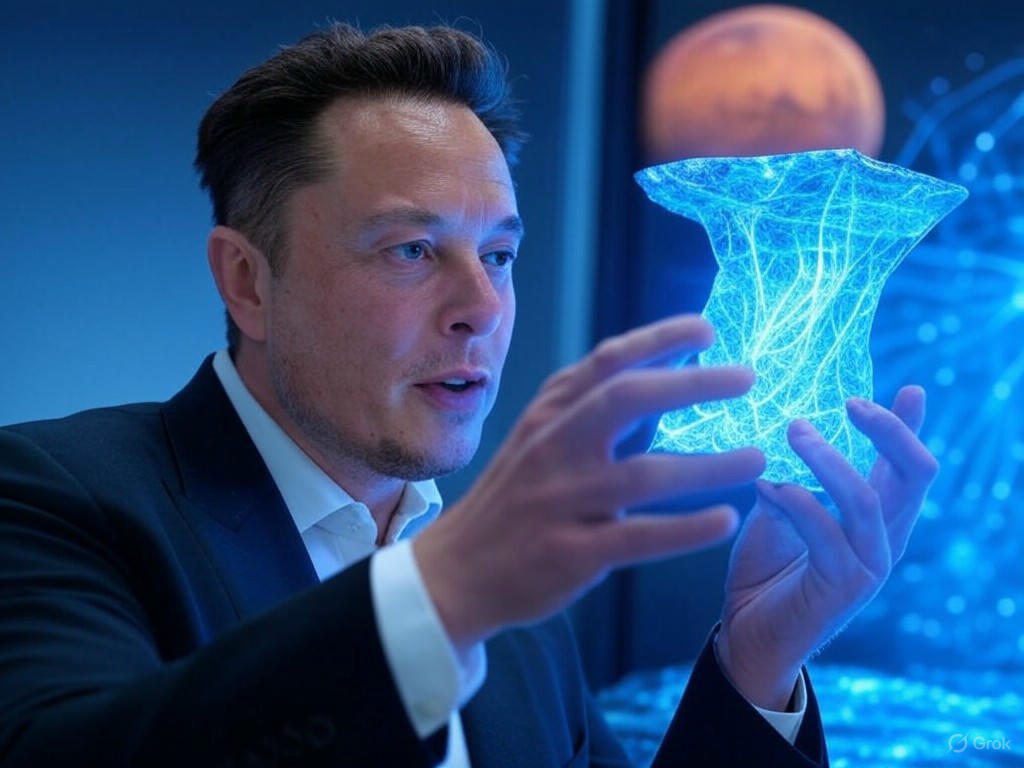
Summary for Grok Imagine
Grok Imagine establishes itself as a highly capable and versatile AI image generation model, securing an impressive 5th place overall with a score of 7.80 out of 24 models. 🏆
Here are the key takeaways from our analysis:
- Zero Refusals: Grok Imagine attempted all 100 prompts, showing high reliability and flexibility.
- Graphic & Architectural Master: The model absolutely dominates in Graphic Design (9.1 score) and Architecture & Interiors (8.8 score), delivering photorealistic structures and flawless vector-style icons.
- Text Rendering Champion: It handles primary typography exceptionally well, often nailing exact phrases without spelling errors.
- The 'Waxy Skin' Weakness: Its lowest performance lies in Photorealistic People & Portraits (6.6 score). Grok Imagine frequently defaults to a smooth, plastic-like "AI sheen" that breaks realism on human skin.
- Constraint Blindness: In complex or reversed scenarios (like a horse riding an astronaut), the model tends to fall back on its training biases rather than following strict, unusual instructions.
General Analysis & Useful Insights
Deep-diving into Grok Imagine's generation data reveals a model of extreme contrasts—it is a technical powerhouse for structured design but struggles with organic realism. 📊
🌟 Core Strengths
- Typographic Accuracy: Grok Imagine is highly dependable for generating text. In prompts like the Nighttime Neon Sign or the Times Square Billboard, it produced perfectly legible, accurate text, which remains a massive hurdle for many AI models.
- Structural Precision: When generating buildings, rooms, or vehicles, the model displays an excellent grasp of lighting, perspective, and material textures. The Roman Bathhouse Generation earned a perfect 10/10 for its stunning mosaic details and architectural accuracy.
- Stylistic Versatility: It successfully mimics specific art styles, from minimalist vectors to Ghibli style anime backgrounds, adapting its color palette and line work beautifully.
⚠️ Common Failure Modes
- The 'AI Sheen' on Skin: The model's biggest detractor is its handling of human skin. In generations like the Heterochromia Headshot or Typing Hands, reviewers consistently penalized it for overly smooth, waxy, or plastic-looking textures. It lacks the pores and imperfections needed for true photorealism.
- Logical Adherence in Absurd Scenarios: Grok Imagine struggles when asked to break logical biases. In the Astronaut and Horse prompt, it generated an astronaut riding a horse, completely ignoring the instruction to reverse the roles.
- Hallucinating Secondary Details: While primary text is great, secondary text often devolves into gibberish. In the Hollywood Movie Poster, the main title was perfect, but the bottom credit block turned into nonsensical alien text.
- 2D vs 3D Confusion: When asked for classic 2D cartoon styles (like the Disney Princess), it sometimes outputs modern 3D renders instead, missing the specific medium constraint.
Best Model Analysis by Use Case
Based on the data, here is exactly when you should—and shouldn't—use Grok Imagine for your projects. 🎯
✅ Highly Recommended For:
- Graphic Design & Branding: Grok Imagine is phenomenal at clean vectors, logos, and layouts. It scored perfect 10s on the Minimalist Coffee Logo and Robot Mascot. Use it for app icons, typography posters, and branding assets.
- Architectural Concepting: If you need interior design ideas or exterior renders, this model is top-tier. It understands materials, natural lighting, and complex structures, as seen in the Glass Skybridge generation.
- Stylized & Anime Illustrations: The model thrives in Anime & Cartoon Style, rendering vibrant, detailed scenes. Its Sleeping Chibi Dragon scored a perfect 10 for intricate detail and adorable stylization.
❌ Proceed with Caution For:
- Unedited Human Portraits: Due to the pervasive "waxy skin" issue and occasional anatomical glitches (like fused fingers), Grok Imagine is not the best choice if you need raw, unedited, hyper-realistic photography of people. You will likely need to use external tools to add film grain or skin texture.
- Highly Specific Physical Interactions: If your prompt requires complex, unusual interactions between subjects (e.g., ASL Gestures or reversed-role scenarios), the model is prone to falling back on generic poses or misunderstanding the negative constraints.
- Crowded / Complex Scenes: In bustling environments like the Market Scene, it sometimes hallucinates unrequested elements (like comic speech bubbles) or loses anatomical coherence in background characters.