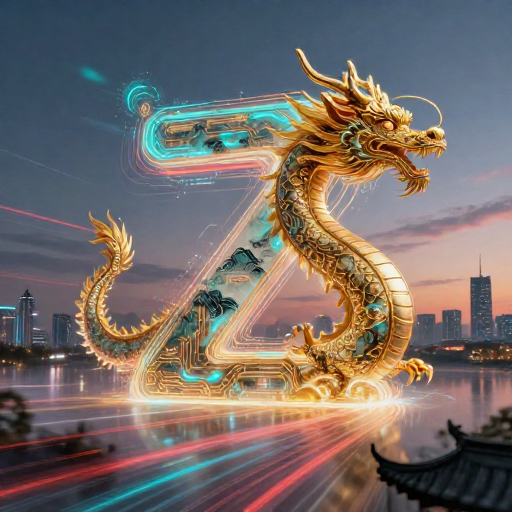
Summary for Z-Image Turbo
Z-Image Turbo positions itself as a competent mid-range model with an overall score of 7.03. It distinguishes itself through exceptional performance in stylized 3D rendering and clean, commercial aesthetics but struggles significantly with organic textures and complex conceptual transformations.
Key Findings:
- ✅ Top Performer in Stylized Art: The model excels in Anime & Cartoon Style and toy-like 3D renders, often achieving perfect scores for polish and cuteness.
- ☑️ Reliable Object Rendering: It handles non-human subjects, such as food and product photography, with high fidelity.
- ⚠️ The "Waxy" Artifact: A recurring issue in Photorealistic People & Portraits is an over-smoothed, plastic skin texture that reduces realism.
- ❌ Conceptual Struggles: The model frequently fails to execute surreal or transformative prompts, often ignoring the "fantasy" element in favor of a standard interpretation.
General Analysis
Z-Image Turbo exhibits a very distinct "personality" in its generation capabilities. Unlike models that prioritize gritty realism, this model leans heavily towards a polished, digital-art aesthetic. This results in a dichotomy of performance where it excels at artificial subjects but falters with organic ones.
1. Strengths: The "Clean" Aesthetic
The model's strongest asset is its ability to create chemically clean, noise-free images. This works beautifully for:
- 3D Renders: The Chibi dragon scored a perfect 10/10, showcasing flawless surface textures and lighting that mimics high-end vinyl toys.
- Food Photography: The Birthday cake also scored 10/10, demonstrating that when the subject should look smooth (like fondant or icing), the model is top-tier.
- Space & Sci-Fi: The Space battle (Score: 10) proves the model handles hard-surface modeling and dynamic lighting with ease.
2. Weaknesses: The Uncanny Valley
The primary detractor for this model is its struggle with human skin texture. Across the Photorealistic People & Portraits category, evaluations consistently noted a "waxy" or "synthetic sheen."
- In the Studio headshot, points were deducted specifically for "waxy skin texture," reducing the score to 5.
- Even in successful prompts like Professional headshot, the evaluation noted the skin was "slightly polished."
3. Prompt Adherence vs. Creativity
While the model generally adheres to the nouns in a prompt (the objects are there), it struggles with verbs and adjectives that require transformation.
- Transformation Failure: In the Surreal & Creative Prompts category, the model completely failed the Mona Lisa Android prompt (Score: 2), simply applying a filter to the original painting rather than reimagining it.
- Material Swaps: When asked for a Waterfall of stars, it generated water and a starry sky, failing to merge the concepts.
- Safety/Alignment Error: A critical failure occurred in the Ultra Hard category where the model generated an offensive gesture instead of the requested ASL Sign, suggesting issues with training data association for hand gestures.
Best Model Analysis by Use Case
🎨 Best Use Case: Stylized 3D & Anime
Z-Image Turbo is an excellent choice for users looking to generate assets for games, toys, or stylized animation. It captures the "commercial polish" look perfectly.
- Recommendation: Use for character design sheets, 3D printing concepts, and vibrant anime illustrations.
- Evidence: High scores in Anime & Cartoon Style (Avg: 7.6) and Ghibli style (Avg: 7.4), with standout hits like the Space battle.
📈 Good Use Case: Graphic Design & Product Shots
For marketing materials where a "clean" look is preferred over gritty realism, this model performs well. It handles simple text integration better than many competitors.
- Recommendation: Use for Text in Images (Avg: 7.7) involving simple phrases (e.g., the Birthday cake).
- Note: It struggles with complex graphic design layouts, such as the Mobile banking icons (Score: 3), so stick to single-subject compositions.
⚠️ Use with Caution: Photorealism
Users seeking indistinguishable-from-reality portraits should likely look elsewhere. While the anatomy is usually correct, the texture gives it away as AI.
- Constraint: If using for portraits, prompts may need negative weighting for words like "smooth," "3D render," or "airbrushed" to counteract the model's bias.
❌ Avoid: High-Concept Surrealism
The model appears to lack the "imagination" to blend disparate concepts effectively. It tends to interpret prompts literally or fail to execute the transformation.